
Where to Begin With an Assessment
Plain-language orientation for parents and adults, whether you are deciding on an assessment or making sense of the report in your hands.
If you have just been told that an assessment is needed, or you are holding a finished report and are not sure where to begin, this is the place to start. Whether you are a parent looking at your child’s results or an adult reading your own, the guides here map out what an assessment involves and what the different professionals actually do, so the process feels less like a maze and more like a path you can follow. The people who did the assessment own the clinical decisions. What you will find here is plain-language orientation, so you can understand each step and ask good questions along the way.
1. Deciding on an Assessment
If an assessment has been recommended but not done yet, or you are still weighing whether to pursue one, start here. These explain what the process involves and which kind of assessment does what.
- The whole process, from referral to results meeting: What to Expect From an Assessment
- The differences between a psychologist and psychiatrist assessment: Psychiatric vs Psychological Assessment
The What to Expect guide also comes as a free one-page handout:
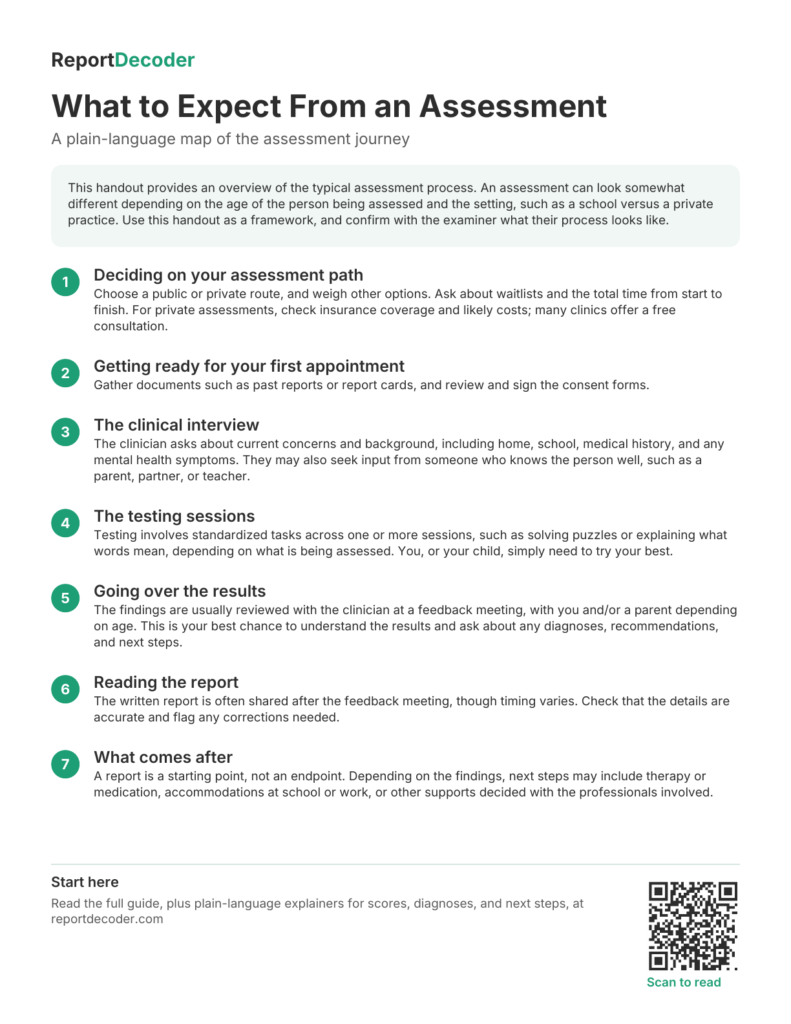
Download the handout
A one-page overview of the typical assessment process that you can print or save, free and with no sign-up.
2. Understanding Your Report
If the report is in hand, whether it is your child’s or your own, these help you make sense of what the numbers and terms actually mean.
- Making sense of the scores: understanding assessment scores
- How the pieces fit together: reading your profile
- When a diagnosis is named: understanding a diagnosis
- The tests behind the scores: assessment tests
3. Taking the Next Steps
Once the report makes sense, here is how to turn it into real support, at school, at work, or at home.
- Support at school, work, and beyond: what’s next
- Put the report into action: the worksheet library
Not sure where you fit yet? Browse every guide.